Cassia bark oil is distilled from the bark of the cassia tree, Cinnamomum cassia. Its main compound is cinnamaldehyde (about 75–91%), which gives a spicy, sweet, warm cinnamon scent.
In traditional Vietnamese medicine, cassia is a familiar remedy for warming the stomach. The oil is also used to remove odours, repel mosquitoes and add flavour. The raw material comes from Vietnam’s largest cassia area, in Lao Cai (including the former Yen Bai province).
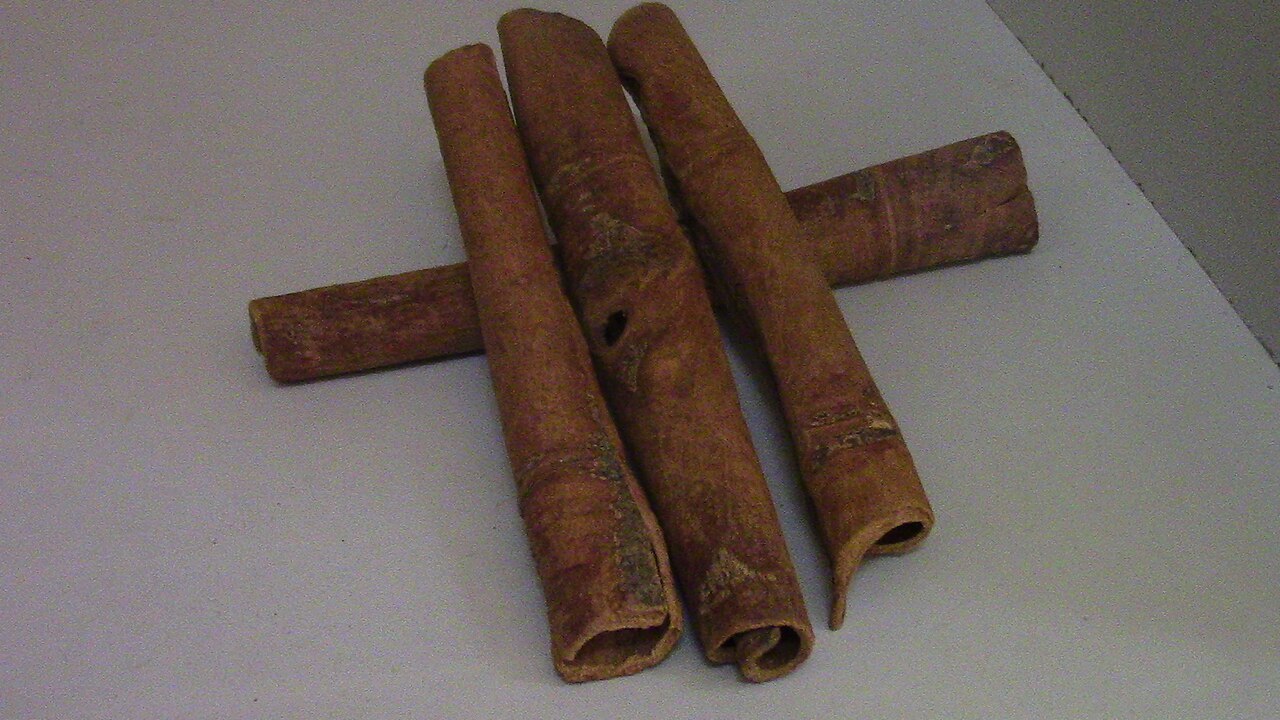
Quick facts
- Scientific name
- Cinnamomum cassia (L.) J.Presl
- Trade names
- Cinnamon bark oil, Cassia bark oil
- Part used
- Trunk bark, branch bark, bark chips
- Method
- Steam distillation
- Appearance
- Yellow to reddish-brown; heavier than water; spicy, sweet, warm cinnamon scent
- Main compounds
- trans-Cinnamaldehyde 75–91%; coumarin, cinnamyl acetate
- Storage
- Dark glass bottle, tightly closed, in a cool place
What is cassia bark oil?
Cassia bark oil (tinh dầu quế vỏ) is the fragrant, volatile part of cassia bark. It is obtained by grinding the bark and steam-distilling it.
The oil is yellow to reddish-brown and heavier than water, so it settles at the bottom of the separator during distillation. Its scent is deep, round and sweeter than oil distilled from twigs and leaves.
The cassia grown as a crop in Vietnam today is mainly Cinnamomum cassia. Sri Lankan cinnamon (Cinnamomum verum) is a different species with a lighter, sweeter scent. Cassia is rich in cinnamaldehyde, so it smells hot and spicy, and it is widely used in food and drinks.
Older sources, such as the work of Đỗ Tất Lợi, also record Thanh cinnamon from Thanh Hoa as Cinnamomum loureiroi. The naming of Vietnam’s cinnamon trees is still not fully agreed. For this reason, a COA should state the scientific name and the raw-material area clearly.
What does the cassia tree look like, and where is it grown?
Cassia is an evergreen tree, 10–15 m tall, with grey-brown bark. Its leaves are thick, with three clear lengthwise veins, and smell of cinnamon when crushed. The tree likes a humid, rainy climate and deep soil. It is usually planted on low hills and mountains in the north.
Vietnam has about 180,000 ha of cassia and is one of the three largest producers and exporters of cassia in the world. The new Lao Cai province (including the former Yen Bai province) alone has over 143,000 ha, about three quarters of the national area.
Other areas include Thai Nguyen, Thanh Hoa, Nghe An, Tra My (Da Nang, formerly Quang Nam province) and Tra Bong (Quang Ngai).
Cassia plantations are thinned gradually over many years, and bark from thinned trees can still be sold. The main harvest usually takes place when trees are over 10–15 years old.
Bark from older trees is thicker and holds more oil than bark from young trees. Besides bark, plantations also produce large amounts of pruned twigs and leaves each year. These are the main raw material for cassia leaf & twig oil.
Cassia in Vietnamese life
Cassia has been part of upland life for hundreds of years. Thanh cinnamon from Thanh Hoa and Tra My cinnamon have been famous since early times. Van Yen cassia (formerly Yen Bai province) now has a geographical indication and is the main income for many Dao and Tay villages.
In the kitchen, cassia goes into pho broth, braised dishes and cakes. In the home, cassia sticks are hung or burned for their warm scent. Cassia oil is a way to “concentrate” that scent so it is easier to use and lasts longer.
Uses
Traditional use
In traditional Vietnamese medicine, cassia is described as pungent, sweet and hot. It is traditionally used to:
- warm the stomach and relieve stomach pain from cold, diarrhoea and poor digestion;
- treat cold hands and feet, chills, and tiredness from getting cold;
- make a liniment by soaking in rice wine, rubbed on aching areas.
Traditional medicine also says cassia should not be used by pregnant women or by people with a “hot” constitution (prone to internal heat or constipation).
What research says
- Antibacterial and antifungal: in laboratory tests, cinnamaldehyde inhibits many bacteria and moulds. This is the basis for using cassia oil to remove odours and clean kitchens.
- Mosquito repellent: studies show cassia oil and cinnamaldehyde repel mosquitoes and kill Aedes mosquito larvae.
- Ant repellent: some tests show ants avoid areas wiped with water mixed with cassia oil.
For information only; not a substitute for medical advice.
Applications by industry
| Industry | Applications |
|---|---|
| Food and drinks | Flavour for cakes, sweets, soft drinks, seasonings |
| Pharmaceuticals, balms | Warming massage oils |
| Cosmetics | Soap, scented candles, perfumes with warm notes |
| Household | Room diffusing, kitchen cleaners, insect-repellent products |
Scent and blending
Cassia bark smells spicy, sweet and warm, and is very distinctive. The scent is strong, so a few drops are enough for a small room. In perfumery, cassia is a middle note that adds warmth.
- Blend with orange or mandarin for a pleasant Lunar New Year or Christmas scent.
- Blend with star anise, tsao-ko or ginger for a warm spice scent, good for cold days.
- Blend with Java citronella or mint when you want to repel mosquitoes with a pleasant scent.

How to use at home
- Room diffusing on cold days: 2–3 drops in a diffuser.
- Repelling mosquitoes and ants: put 3–5 drops on a cotton ball and place it in a corner or on a window sill; replace after 1–2 days.
- Wiping the kitchen and ant trails: 5–10 drops in a bucket of water; wear gloves when mixing.
- Freshening cupboards and shoes: 2–3 drops on a cloth bag or a piece of wood.
Safe use
- Cinnamaldehyde easily causes skin irritation and allergy, even when diluted. Do not apply cassia oil to skin.
- Do not diffuse at high strength in a closed room with young children, people with asthma or pets.
- Pregnant women should not use it; do not diffuse cassia for children under 6.
- Keep away from the eyes; do not swallow; keep out of reach of children.
- If swallowed: do not try to induce vomiting; rinse the mouth and call emergency services (115 in Vietnam) or go to a medical facility. On skin: wipe with cooking oil, then wash with soap.
How to spot good oil and how to store it
- Real cassia oil is heavier than water: a few drops in a glass of water sink to the bottom. This is normal, but it is not enough to prove the oil is pure; check the chromatography results on the COA.
- The oil is clear and yellow-brown, with a clear cinnamon scent and no harsh solvent smell.
- Cassia oil darkens and thickens with age as cinnamaldehyde oxidises. Keep it tightly closed in a cool place and use within about 2 years.
How is cassia bark oil different from cassia leaf & twig oil?
| Criterion | Cassia bark | Cassia leaf & twig |
|---|---|---|
| Raw material | Trunk bark, branch bark | Leaves, pruned young twigs |
| Scent | Deep, round, sweet | Spicier, sharper |
| Cinnamaldehyde | About 75–91% | About 70–88% |
| Mostly used for | Premium food flavours | Household, cleaning, industry |
Why source cassia oil from Vietnam?
Cassia comes from a few main origins. China and Vietnam grow Cinnamomum cassia, while Indonesia is known for a related species, Cinnamomum burmannii. Sri Lanka grows true cinnamon, Cinnamomum verum, which is a different product.
Vietnam brings a few clear strengths for cassia bark oil:
- Scale of the crop: about 180,000 ha, with over 143,000 ha in Lao Cai (including the former Yen Bai province).
- Long tradition: cassia has been grown in Vietnam’s uplands for hundreds of years, and Van Yen cassia has a geographical indication.
- High cinnamaldehyde: samples of Vietnamese cassia bark in research gave about 89–91% cinnamaldehyde.
- A traceable chain: Thảo Dược Xanh (Blue Herbs) buys from named areas, records the area and estimated tree age, and tests each batch.
Quality specifications
The main specifications for cassia bark oil are cinnamaldehyde and coumarin content. Samples of Vietnamese cassia bark in research gave about 89–91% cinnamaldehyde. Coumarin is limited in food in many markets, so it is stated clearly on the COA.
Each batch comes with a COA and an MSDS. In cosmetics, cinnamaldehyde must be used within IFRA limits.
For export, the business needs to declare the intended use clearly: food, cosmetic or medicinal. Each use falls under different rules.
Reference figures; actual specifications are given on each batch’s COA.
What buyers usually ask for
Buyers of cassia bark oil usually check these points before a first order:
- Cinnamaldehyde and coumarin on the COA, tied to a batch code.
- A GC or GC-MS chromatogram, to see the full profile and check that bark oil has not been blended with cheaper leaf oil or synthetic cinnamaldehyde.
- Scientific name and plant part, so that cassia bark oil is not confused with leaf & twig oil or with Sri Lankan cinnamon oil.
- MSDS (SDS) for shipping and safe handling.
- A sample before contract, to test in their own lab or formulation. Contact the company to discuss sample needs.
- Intended use: food flavour, cosmetic, household or medicinal. This decides which rules apply.
- Fragrance compliance: for cosmetics, buyers check IFRA limits for cinnamaldehyde. In the EU, cinnamal is also one of the fragrance allergens that must be declared on cosmetic labels above set levels.
Growers & cooperatives
The company buys dry cassia bark, bark chips and bark from pruned branches. It must be free of mould and soil. Priority areas:
- Lao Cai: Van Yen and Tran Yen (formerly Yen Bai province); Bac Ha, Bao Yen, Van Ban.
- Thai Nguyen: Dinh Hoa; Cho Don (formerly Bac Kan province).
- Thanh Hoa (Thuong Xuan), Nghe An, Da Nang (Tra My, formerly Quang Nam province), Quang Ngai (Tra Bong).
Requirements when selling bark to the company:
- Bark dried evenly in the sun or a dryer, crisp when snapped, with no white mould and no damp smell.
- No soil, stones or dry leaves mixed in; bark chips packed separately from bark quills.
- State the area and estimated tree age so the company can sort lots and trace them.
There are two bark-peeling seasons each year: spring (about March–May) and autumn (about August–October), when the bark peels easily. The company prefers organic cassia plantations and households and cooperatives with steady output. Pruned twigs and leaves are bought too.
The company commits to sustainable harvesting. It does not buy material from forest clearing, from trees dug out by the roots, or from special-use (protected) forests.
To get a quote, call or message on Zalo: +84 983 299 529. See also the Raw material sourcing page.
Extraction process
- Check moisture and mould; grind the bark finely.
- Steam-distil; the cassia oil settles at the bottom of the separator.
- Separate the water and filter.
- Test the oil and file the COA under the batch code.
Frequently asked questions
Does cassia oil repel mosquitoes?
Studies show it repels mosquitoes, but the scent evaporates, so it needs to be reapplied often.
Can I add cassia oil to food or drinks at home?
It is not advisable. Essential oil is very concentrated and easily causes irritation. Cinnamon flavour in factory-made food is used at controlled doses.
Why does cassia oil sink in water?
Cinnamaldehyde is heavier than water. This is a normal property of cassia oil.
Is Vietnamese cassia different from Sri Lankan cinnamon?
Yes. Vietnamese cassia smells hot and spicy and is rich in cinnamaldehyde; Sri Lankan cinnamon smells lighter and sweeter. Cassia also contains more coumarin than Sri Lankan cinnamon.
Can cassia oil be used for massage?
It should not be rubbed on directly, because it easily irritates skin. Massage oils with cassia on the market are formulated at very low doses.
How much oil does a tonne of cassia bark give?
According to Đỗ Tất Lợi, cassia bark contains about 1–5% oil, depending on species, area and tree age. The actual yield also depends on how dry the bark is and how it is distilled. The company tests a sample before giving a price.
What is coumarin, and why is it on the COA?
Coumarin is a natural compound found in cassia. Many markets limit it in food, so buyers need to know the level in each batch.
Is cassia bark oil the same as "cinnamon oil"?
Not always. “Cinnamon oil” may mean cassia bark oil, cassia leaf & twig oil or Sri Lankan cinnamon bark or leaf oil. Always check the scientific name and plant part on the COA.
I have a cassia plantation. How do I sell bark to the company?
Call or message on Zalo (+84 983 299 529) with photos of the bark and your estimated volume. The company will quote by bark type.
Read more: Cassia leaf & twig oil Star anise oil Tsao-ko oil Vietnamese herbal essential oils
Supplying cassia bark raw material, or interested in contract growing?
Thảo Dược Xanh buys raw materials and provides technical support to farmers and cooperatives in Vietnam.
References: Cây quế – Đỗ Tất Lợi · Phát triển bền vững ngành quế (Nhân Dân) · Cần khai báo rõ mục đích khi xuất khẩu tinh dầu quế (Nhân Dân)