Tsao-ko oil is steam-distilled from the dried fruit of black cardamom (thảo quả), Amomum tsaoko. The plant is grown under forest canopy above 1,000 m. Its main component is 1,8-cineole, with geranial and other aldehydes, giving a warm, spicy, cool and slightly smoky scent.
In traditional Vietnamese medicine, tsao-ko is used for bloating and indigestion. The oil is used as a food flavouring, in seasonings and in perfumery.
Quick facts
- Scientific name
- Amomum tsaoko Crevost & Lemarié
- Trade name
- Black cardamom oil, Tsao-ko oil
- Part used
- Dried fruit (mainly the seeds)
- Method
- Steam distillation
- Appearance and odour
- Pale yellow; warm, spicy, cool, slightly smoky scent
- Main components
- 1,8-Cineole 25–45%; geranial, (E)-2-undecenal, α-terpineol
- Storage
- Dark glass bottle, tightly closed, in a cool place
What is tsao-ko oil?
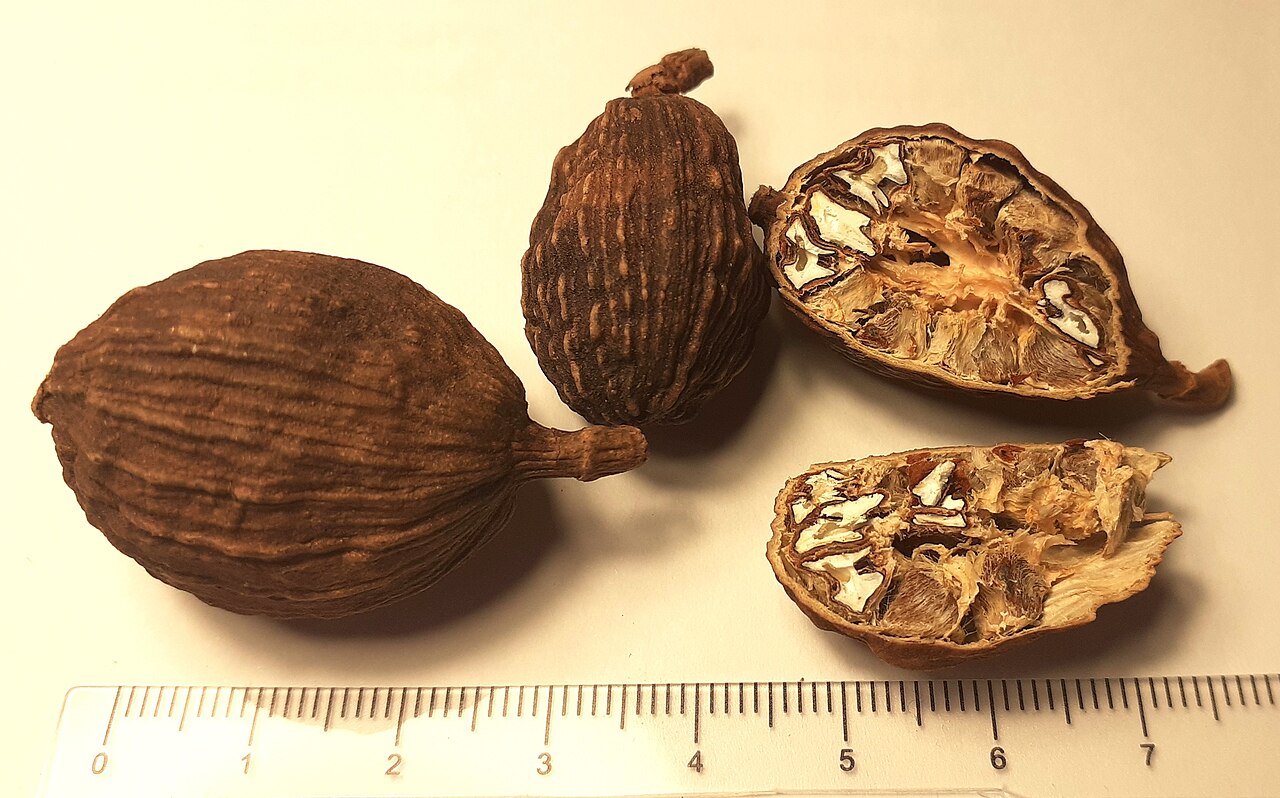
Tsao-ko (black cardamom) is a large herbaceous plant in the ginger family. Its fruit is oval, with a reddish-brown, ridged skin. Inside are many small, fragrant seeds.
The fruit is dried and used as a spice. It is the same “tsao-ko pod” that goes into a pot of Vietnamese phở broth. Distilling the crushed dried fruit gives a pale yellow oil with a warm, spicy, cool and slightly smoky scent.
Part of the smoky note comes from the traditional way of drying the fruit over a wood fire. Tsao-ko oil is much less common than many other oils.
The raw material only grows in high mountains, with one harvest a year. Most of the dried fruit is also sold as a spice, and only part of it goes to distillation.
What does the tsao-ko plant look like, and where does it grow?
Tsao-ko grows 2–3 m tall in clumps, with long leaves like a large ginger plant. Its flowers and fruit grow right at the base, close to the ground.
It is usually grown at about 1,000–1,500 m, where the climate is cool and moist. The plant needs shade under forest canopy and humus-rich soil along streams. One clump can bear fruit for many years.
The largest growing area is the former Lao Cai province (about 12,500 ha, mostly in Bat Xat, Sa Pa and Van Ban). Other areas include Mu Cang Chai (Lao Cai, formerly Yen Bai province) and Lai Chau (mostly in Phong Tho). Vi Xuyen tsao-ko (Tuyen Quang, formerly Ha Giang province) has a geographical indication.
In Lao Cai, tsao-ko is usually harvested from late July to about October. The classic reference by Do Tat Loi records October to December. Ripening time varies with altitude and from year to year.
Tsao-ko in the Vietnamese kitchen
Tsao-ko is one of the “trio” of spices behind the aroma of beef phở broth, together with star anise and cinnamon. Cooks usually roast the pods until fragrant, crack them, then drop them into the stock.
In the northwest highlands, tsao-ko is also used to marinate smoked buffalo meat, cook the traditional thắng cố stew and flavour rice wine. Its aroma covers gamey smells and adds warmth to winter dishes.
In industry, tsao-ko oil helps phở seasoning packs, concentrated broths and sausages keep a stable flavour from batch to batch. Producers no longer depend on the quality of each lot of dried fruit. These food companies are the main business customers for tsao-ko oil.
Tsao-ko and the forest: a sustainability story
Tsao-ko was once called the “green gold” of the highlands. It helped many Hmong and Dao families escape poverty. But expanding tsao-ko under natural forest, including in special-use forest, has thinned the forest.
Drying tsao-ko with firewood also uses a lot of wood. According to Lao Cai Newspaper, drying 100 kg of fresh fruit needs about 3–4 m³ of firewood.
Lao Cai no longer allows tsao-ko to expand under natural forest. The province aims to phase tsao-ko out of natural forest by 2030. Thao Duoc Xanh gives priority to fruit from production forest and household gardens. The company also encourages improved, wood-saving drying kilns.
Uses
Traditional use
Tsao-ko is described as pungent and warming. In traditional Vietnamese medicine, tsao-ko is used:
- for bloating, indigestion and poor appetite;
- for vomiting, stomach ache from cold and diarrhoea;
- in the past, also in remedies for malaria.
What research says
- Antimicrobial and antioxidant: in laboratory tests, tsao-ko oil inhibits some bacteria and fungi and shows antioxidant activity.
- Insect repellent: in trials, tsao-ko oil repelled and killed some insect pests of stored grain and produce.
For information only; not a substitute for medical advice.
Applications by industry
| Industry | Applications |
|---|---|
| Food | Phở seasoning flavour, broths, sausages, canned foods |
| Beverages | Liqueurs, spiced teas |
| Perfumery | Warm, spicy note; oriental accords |
| Household | Winter room scents, deodorising storerooms |
Why source tsao-ko oil from Vietnam?
Amomum tsaoko grows in a fairly small mountain region, including northern Vietnam and neighbouring parts of China and Laos. For buyers, the Vietnamese supply has some clear points of interest.
- A core growing area: the northern highlands of Vietnam hold large tsao-ko areas, such as about 12,500 ha in the former Lao Cai province.
- Recognised origin: Vi Xuyen tsao-ko has a geographical indication.
- Culinary link: tsao-ko is a signature spice in phở, which helps brands tell an authentic Vietnamese flavour story.
- Traceability: each lot records the buying area, so buyers can see where the fruit came from.
- Sustainability: we prioritise fruit from production forest and household gardens, not from expansion into special-use forest.
Because tsao-ko has one harvest a year, supply is seasonal. Planning ahead is important for larger orders.
Scent profile and blending
Tsao-ko smells warm and spicy, cool from cineole, with a hint of smoke. It immediately brings to mind phở broth and highland kitchens.
- Blend with cinnamon and star anise for a rich spice accord.
- Blend with orange and ginger for candles and winter room scents.
- Blend with patchouli for oriental perfumes.

How to use at home
- Room diffusing: 2–3 drops, blended with cinnamon, star anise and orange.
- Tummy rub for bloating (adults): mix 1 drop with 10 ml carrier oil.
- Scenting a spice cupboard or deodorising a rice store: put a few drops on cotton wool placed nearby. Never drip it directly onto food.
DIY “warm kitchen” sachet
Put into a cloth bag 2 dried tsao-ko pods (cracked), 2 small cinnamon sticks and 3 star anise. Add 3 drops tsao-ko oil and 3 drops orange oil. Hang it in the kitchen or living room on cold days, and add more drops when the scent fades.
Safe use
- Do not apply undiluted to skin. For massage, use at most 1 drop in 10 ml carrier oil.
- Do not add it to food at home.
- Keep away from eyes; do not swallow. If swallowed, do not induce vomiting. Go to a medical facility and take the bottle with you.
- Cineole-rich oils should not be used near the face of young children, especially under 6 years old, as they may cause breathing problems. Do not diffuse near people with asthma.
- Pregnant or breastfeeding women should ask a doctor before use.
- Keep cats and pet birds out of the room when diffusing; do not apply oil to pet fur.
How to recognise good oil, and how to store it
- Good oil is pale yellow and clear. It smells warm, spicy and cool, with light smoke, never burnt or sour.
- A very heavy smoky smell may mean the fruit was scorched during drying. Good oil has a balanced scent.
- Keep tightly closed and away from sunlight. Best used within about 2 years.
Tsao-ko, green cardamom and amomum
| Criterion | Tsao-ko | Green cardamom | Amomum (sa nhân) |
|---|---|---|---|
| Scientific name | Amomum tsaoko | Elettaria cardamomum | Amomum villosum and related species |
| Scent | Warm, spicy, smoky | Sweet, floral, cool | Spicy, aromatic, slightly minty |
| Mostly used in | Phở, savoury dishes | Tea, baking, curry | Digestive remedies, spices |
Quality specifications
The main specification is the chromatogram (cineole, geranial). According to Do Tat Loi, tsao-ko fruit contains about 1–1.5% essential oil. Some analyses of the seeds alone give a higher figure. Every lot comes with a COA, an MSDS and a record of the buying area for traceability.
During drying, too much heat can scorch the skin before the seeds are dry, giving the oil a burnt smell. The fruit should be kept whole. Seeds are only removed at distillation time, because shelled seeds lose their aroma quickly.
Reference figures only; actual specifications follow the COA of each lot.
What buyers usually ask for
Tsao-ko oil is mostly bought by food and seasoning companies, which tend to have clear checklists.
- COA and MSDS: every lot has both. Ask for the documents of the specific lot.
- Chromatogram: buyers compare cineole and geranial levels with their reference flavour.
- Origin record: each lot notes the buying area, which supports traceability checks.
- Sustainability: some buyers ask how the fruit was sourced. We prioritise production forest and household gardens.
- Sample before contract: most buyers test a sample in their own recipe first. Contact us to discuss what is available.
- Advance booking: order before the fruit ripens so there is time to collect fruit and schedule distillation.
Growers & cooperatives
The company buys dried tsao-ko fruit in the ripening season, usually late in the year. The exact timing depends on the altitude of each area. Priority areas:
- Lao Cai: Bat Xat, Sa Pa, Van Ban, Mu Cang Chai (formerly Yen Bai province).
- Lai Chau: Phong Tho and other highland districts.
- Tuyen Quang: Vi Xuyen (formerly Ha Giang province).
Requirements and commitments:
- Fruit dried over even heat, dry and crisp, not scorched, not mouldy. Small fruit and second-grade fruit can still be distilled.
- Fruit loses most of its weight when dried. The company buys by kilogram of dried fruit, so pricing is clear.
- Sustainability commitment: priority for fruit from production forest and household gardens. We do not buy fruit from areas expanded into special-use forest.
To sell tsao-ko, call or message on Zalo: +84 983 299 529. See more on the Raw material sourcing page.
Extraction process
- Sort the fruit and remove mouldy pods; crush.
- Steam-distil and separate the oil layer.
- Filter and remove water.
- Test the oil and keep the COA under the lot number.
Frequently asked questions
What does tsao-ko oil smell like?
Warm and spicy like roasted tsao-ko pods, with a cool cineole note and a light hint of smoke.
How is tsao-ko different from green cardamom?
Green cardamom smells sweet and floral. Tsao-ko is stronger, spicier and smokier, and suits savoury dishes.
Does tsao-ko oil help digestion?
In traditional Vietnamese medicine, tsao-ko is used to warm the stomach and ease digestion. The oil is for external use only; do not swallow it.
Why is tsao-ko oil rare?
The raw material only grows in high mountains, with one harvest a year. Growing areas are also being managed to protect the forest.
Can I use tsao-ko oil instead of dried pods when cooking phở at home?
Not recommended. The oil is very concentrated and hard to dose. At home, use roasted dried pods in the traditional way.
Should spice companies order in advance?
Yes. Order before the fruit ripens so the company has time to collect fruit and schedule distillation.
Is tsao-ko oil sourced sustainably?
We prioritise fruit from production forest and household gardens. We do not buy fruit from areas expanded into special-use forest.
I have second-grade tsao-ko. Will the company buy it?
Yes, as long as the fruit is evenly dried and not mouldy.
Read more: Cassia bark oil Star anise oil Ginger oil Vietnamese herbal essential oils
Supplying tsao-ko raw material, or interested in contract growing?
Thảo Dược Xanh buys raw materials and provides technical support to farmers and cooperatives in Vietnam.
References: Managing tsao-ko under natural forest (Lao Cai Newspaper) · Geographical indication for Vi Xuyen tsao-ko · Tsao-ko, a crop that brings prosperity (Lao Cai Newspaper)