Ginger oil is steam-distilled from the rhizome of ginger (gừng), Zingiber officinale. Its main component is zingiberene, together with other sesquiterpenes. These give a warm, spicy and slightly lemony scent.
In traditional Vietnamese medicine, ginger is used for colds and nausea. The oil is used in warming massage blends, room diffusing and as a flavour and fragrance ingredient. Our raw material comes from highland ginger areas such as Ky Son (Nghe An) and Si Ma Cai (Lao Cai).
Quick facts
- Scientific name
- Zingiber officinale Roscoe
- Trade name
- Ginger oil
- Part used
- Fresh or dried rhizome
- Method
- Steam distillation
- Appearance and odour
- Pale yellow to amber; warm, spicy ginger scent
- Main components
- Zingiberene 20–40%; ar-curcumene, β-sesquiphellandrene, β-bisabolene
- Storage
- Dark glass bottle, tightly closed, in a cool place
What is ginger oil?
Ginger oil is the volatile, aromatic part of the ginger rhizome. It is made by slicing or crushing the rhizomes and then steam-distilling them. The oil is pale yellow to amber, with a warm, slightly sweet ginger scent.
Oil distilled from fresh ginger also carries a light lemony note. Oil from dried ginger smells deeper and woodier.
Many people are surprised by one thing. Ginger oil smells like ginger, but it does not taste hot like the fresh root. The heat comes from gingerol and shogaol, which are not very volatile, so they barely pass over with the steam.
To keep that pungency, producers make ginger oleoresin with a solvent. Oleoresin is a different product from the essential oil.
What does the ginger plant look like, and where does it grow?
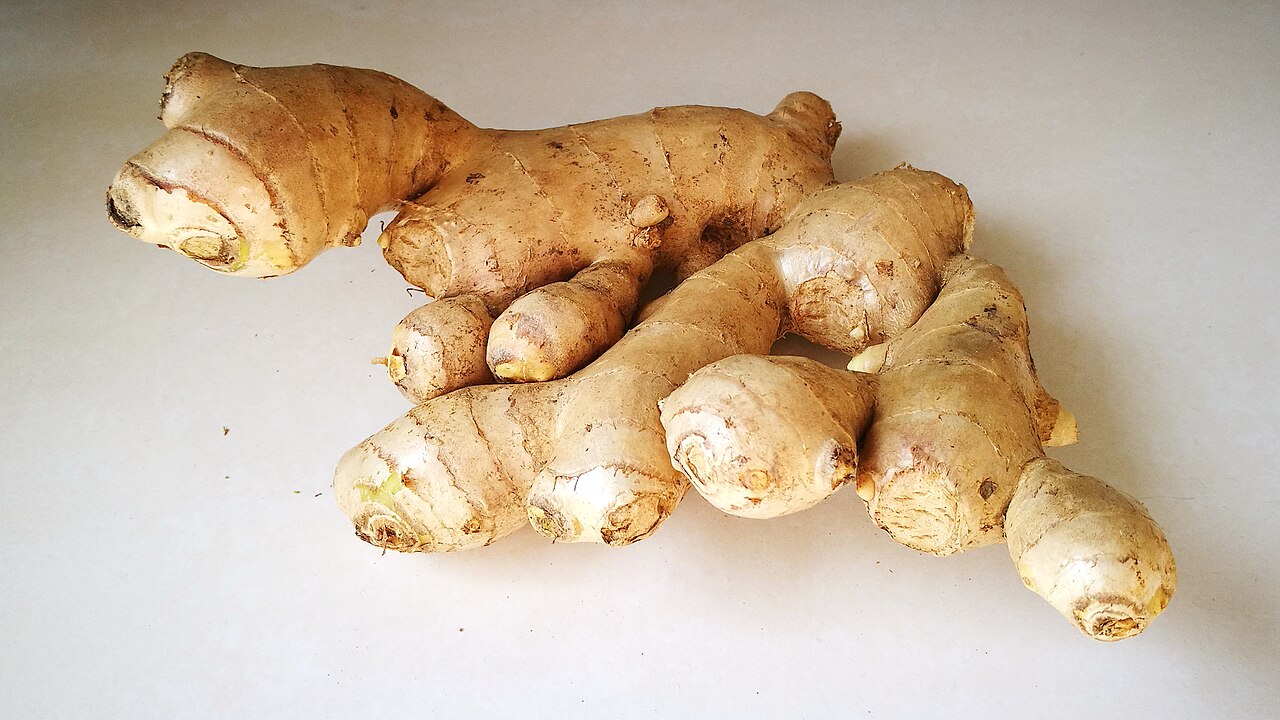
Ginger is a herbaceous plant 0.6–1 m tall, with long, narrow, alternate leaves. The rhizome is branched, with a pale yellow skin and yellow flesh. Ginger likes loose, well-drained soil rich in humus, and grows on both hillsides and riverbank land.
In Si Ma Cai (Lao Cai), ginger is planted from rhizome buds around the first and second lunar months. After 7–8 months, farmers harvest from late in the ninth lunar month until the end of the year. Other areas vary by a few weeks, depending on altitude and weather.
Ginger is grown in almost every province of Vietnam. Ky Son ginger (Nghe An) has held a geographical indication since 2019 and is grown above 700 m. Other growing areas include Si Ma Cai (Lao Cai, about 155 ha in 2024), Huong Hoa (Quang Tri) and Tinh An (Quang Ngai).
Ginger in Vietnamese daily life
Ginger is in nearly every Vietnamese kitchen. It goes into fish soup, braised pork, ginger tea and candied ginger for the Lunar New Year (Tet).
When someone catches a chill, many families cook rice porridge with spring onion and ginger. Others soak their feet in ginger water, or rub the skin with crushed ginger in rice wine. Ginger oil brings that familiar warmth into massage and cosmetic products, without crushing fresh roots every time.
Uses
Traditional use
Fresh ginger (sinh khương) is described as pungent and warming. In traditional Vietnamese medicine, ginger is used:
- for colds and chills, to promote sweating;
- for vomiting, nausea, stomach ache from cold, and indigestion;
- externally, in massage for aches and for feeling chilled.
What research says
- Nausea: ginger has been widely studied for easing nausea. For inhaled ginger oil, trial results are still mixed.
- Warming and muscle comfort: massage with diluted ginger oil gives a warm feeling. A few small studies suggest it may help with muscle and joint aches.
- Antimicrobial and antioxidant activity: in laboratory tests, ginger oil shows antibacterial and antioxidant activity.
For information only; not a substitute for medical advice.
Zingiberene and gingerol: the two “faces” of ginger
Ginger has two important groups of compounds. The first is the essential oil, led by zingiberene. It gives the warm aroma you notice when you crush a piece of ginger.
The second group is gingerol and shogaol. They create the hot, biting taste when you eat ginger.
Ginger essential oil contains almost only the first group.
When ginger is sun-dried or kiln-dried, some gingerol turns into shogaol, which is even hotter. The essential oil changes too: fewer fresh lemon notes, more warm and woody notes. That is why buyers usually choose fresh-ginger oil for drinks and cosmetics, and dried-ginger oil for massage oils and candles.
Applications by industry
| Industry | Applications |
|---|---|
| Food and beverages | Ginger flavour for soft drinks, confectionery and seasonings |
| Pharmaceuticals, balms | Warming massage oils, medicated plasters |
| Cosmetics | Massage oils, shampoos, shower gels |
| Perfumery | Warm, spicy middle note |
Why source ginger oil from Vietnam?
Ginger oil is also produced in several other countries, including India and China. Vietnam is a smaller origin, but it has some useful strengths for buyers.
- Highland raw material: much of our ginger comes from mountain districts, including Ky Son above 700 m. Local varieties are often small, knobbly and very aromatic.
- Clear regional identity: Ky Son ginger has a geographical indication, which helps with origin storytelling for brands.
- Fresh or dried options: we buy both fresh rhizomes and dried slices, so oil profiles can lean fresh-lemony or warm-woody.
- Less waste: small or misshapen roots that are not sold as fresh ginger can still be distilled. This adds value for farmers.
As with any natural oil, the profile varies by variety, root age, drying and season. Buyers should judge each lot by its own documents, not by origin alone.
Scent profile and blending
Ginger smells warm, lightly spicy and a little earthy. Fresh-ginger oil adds a bright lemony note.
- Blend with orange or lemon for a fresh, warm, friendly scent.
- Blend with cinnamon and star anise for candles and winter room scents. For massage oils, use star anise only, not cinnamon.
- Blend with Java citronella and mint for a foot massage oil after a long day.

How to use at home
- Neck, shoulder and limb massage when chilled: mix 2 drops with 10 ml carrier oil.
- Foot soak: mix 2–3 drops with a spoonful of salt, then add to a basin of warm water.
- Inhaling while travelling (adults): put 1 drop on a tissue and hold it near your nose.
- Room diffusing on cold days: 2–3 drops, blended with orange.
DIY warming rub for adults
Mix 30 ml coconut or almond oil with 4 drops ginger, 1 drop star anise and 2 drops mint. Shake well and keep in a dark glass bottle. Use it on the neck, back and calves after being caught in the rain or working outdoors in the cold.
Do not swap star anise for cinnamon oil. Cinnamon oil can easily cause burning and irritation, even when diluted. Test a little on your wrist first, and do not apply to broken skin. This recipe is for adults only, not for children or pregnant women.
Safe use
- Always dilute before applying to skin (about 1–2%, that is 2–4 drops in 10 ml carrier oil). Patch-test on your wrist first.
- Old, oxidised ginger oil is more likely to irritate skin. If the smell has changed, do not put it on your skin.
- Do not swallow; keep away from eyes. If swallowed, do not induce vomiting. Go to a medical facility and take the bottle with you.
- Pregnant women should ask a doctor before use. Do not use on young children.
- Diffuse in a ventilated room. Keep dogs and cats out of the room, and do not apply oil to pet fur.
How to recognise good oil, and how to store it
- Good oil is pale yellow to amber and clear. The ginger scent is distinct and warm, never burnt.
- Fresh-ginger oil smells fresher and more lemony; dried-ginger oil smells warmer and richer. Both are genuine ginger oil.
- Keep tightly closed in a cool place and avoid opening the bottle too often. Best used within about 2 years.
Ginger oil, ginger oleoresin and shampoo ginger oil
| Criterion | Ginger oil | Ginger oleoresin | Shampoo ginger oil |
|---|---|---|---|
| How it is made | Steam distillation | Solvent extraction | Steam distillation |
| Pungent taste | No | Yes (gingerol) | No |
| Main component | Zingiberene | Gingerol + essential oil | Zerumbone |
| Mostly used for | Cosmetics, massage, flavour and fragrance | Food and beverages | Massage, cosmetics |
Quality specifications
The key specifications are the chromatogram (zingiberene and other sesquiterpenes), relative density and refractive index. Fresh rhizomes yield about 0.4% essential oil, depending on variety and maturity. Dried ginger gives a higher yield by weight. Every lot comes with a COA and an MSDS.
Reference figures only; actual specifications follow the COA of each lot.
What buyers usually ask for
International buyers of ginger oil usually ask a similar set of questions. Preparing these early saves time on both sides.
- COA and MSDS: every lot has both. Ask for the documents of the specific lot you are considering.
- Chromatogram: many buyers compare the zingiberene and sesquiterpene profile with their own reference oil.
- Fresh or dried raw material: say which odour profile you need, as the two smell clearly different.
- Sample before contract: most buyers want to smell and test a sample first. Contact us to discuss what is available in the current season.
- Timing: the main ginger buying season is October to December, so plan larger orders around it.
Growers & cooperatives
The company buys fresh ginger rhizomes and dried ginger slices. Small or ugly roots that do not make the grade for the fresh market are still welcome, as long as they are not rotten or mouldy. Priority areas:
- Nghe An: Ky Son (Ky Son ginger geographical indication).
- Lao Cai: Si Ma Cai.
- Quang Tri: Huong Hoa. Quang Ngai: Tinh An.
Requirements when selling:
- Roots clean of soil, not rotten, without long sprouts.
- Dried slices of even thickness, sun-dried until crisp, not mouldy.
- Small, many-fingered ginger (gừng dé) is usually more aromatic than large “buffalo-horn” ginger. The company tests samples to see which variety gives more oil.
The main buying season is October to December. To talk about selling ginger, call or message on Zalo: +84 983 299 529. See more on the Raw material sourcing page.
Extraction process
- Wash off soil and remove rotten roots; slice or crush.
- Steam-distil and separate the oil layer.
- Filter and remove water.
- Test the oil and keep the COA under the lot number.
Frequently asked questions
Why is ginger oil not hot and spicy like fresh ginger?
The pungency comes from gingerol, which barely passes over with the steam during distillation.
Does ginger oil help with travel sickness?
Many people feel more comfortable when they smell ginger, but research evidence is still limited. Young children, pregnant women and people with health conditions should ask a doctor.
Can I cook with ginger oil instead of fresh ginger?
It is not recommended at home. The oil is very concentrated and is only used in industrial food production with controlled dosing.
Can ginger oil irritate the skin?
Yes, if used too strong. Always dilute it and do a patch test first.
How much oil does one tonne of fresh ginger give?
About 4 kg at trial scale, depending on the variety and maturity of the roots.
Should I buy oil from fresh or dried ginger?
Fresh ginger gives a fresh, lemony scent that suits cosmetics and drinks. Dried ginger gives a warm, rich scent that suits massage oils and candles.
How is ginger oil different from shampoo ginger oil?
Both are steam-distilled from plants in the ginger family. Ginger oil is rich in zingiberene, while shampoo ginger (Zingiber zerumbet) oil is rich in zerumbone and smells different.
Do you buy ugly or small ginger roots?
Yes, as long as the roots are not rotten or mouldy.
Read more: Shampoo ginger oil Cassia bark oil Tsao-ko (black cardamom) oil Vietnamese herbal essential oils
Supplying ginger raw material, or interested in contract growing?
Thảo Dược Xanh buys raw materials and provides technical support to farmers and cooperatives in Vietnam.
References: Ky Son ginger specialty (Ministry of Industry and Trade) · Ginger harvest in Si Ma Cai (Lao Cai Newspaper)