Shampoo ginger oil is steam-distilled from the rhizomes of Zingiber zerumbet, a plant that grows wild in many parts of Vietnam. Its signature compound is zerumbone, and the amount varies strongly by region.
Shampoo ginger is a folk remedy for stomach aches, swelling and bruises. Zerumbone is now widely studied for its anti-inflammatory activity.
Quick facts
- Scientific name
- Zingiber zerumbet (L.) Sm.
- Trade names
- Zerumbet oil, Bitter ginger oil
- Part used
- Fresh or dried rhizome
- Method
- Steam distillation
- Appearance and odour
- Colourless to pale yellow; may crystallise in the cold; bitter, warm ginger scent
- Main components
- Zerumbone (about 40–72% in Vietnamese rhizome samples, depending on region); camphene, humulene
- Storage
- Dark glass bottle, tightly closed; crystallising in the cold is normal
What is shampoo ginger oil?
Shampoo ginger (gừng gió), also called bitter ginger, is in the same genus as culinary ginger. Other Vietnamese names include riềng gió and phong khương. Its rhizome is larger than ginger, pale yellow inside, bitter and pungent.
Fresh or dried rhizomes are steam-distilled to give a colourless to pale yellow oil. It smells of bitter ginger, warm and slightly woody.
In cold weather, the oil may turn cloudy or crystallise, because zerumbone is a solid. This is normal and does not mean the oil has gone bad.
Shampoo ginger oil is very different from ginger oil. Ginger oil is rich in zingiberene and has the familiar ginger smell. Shampoo ginger oil is rich in zerumbone and smells more bitter.
What does the plant look like, and where does it grow?
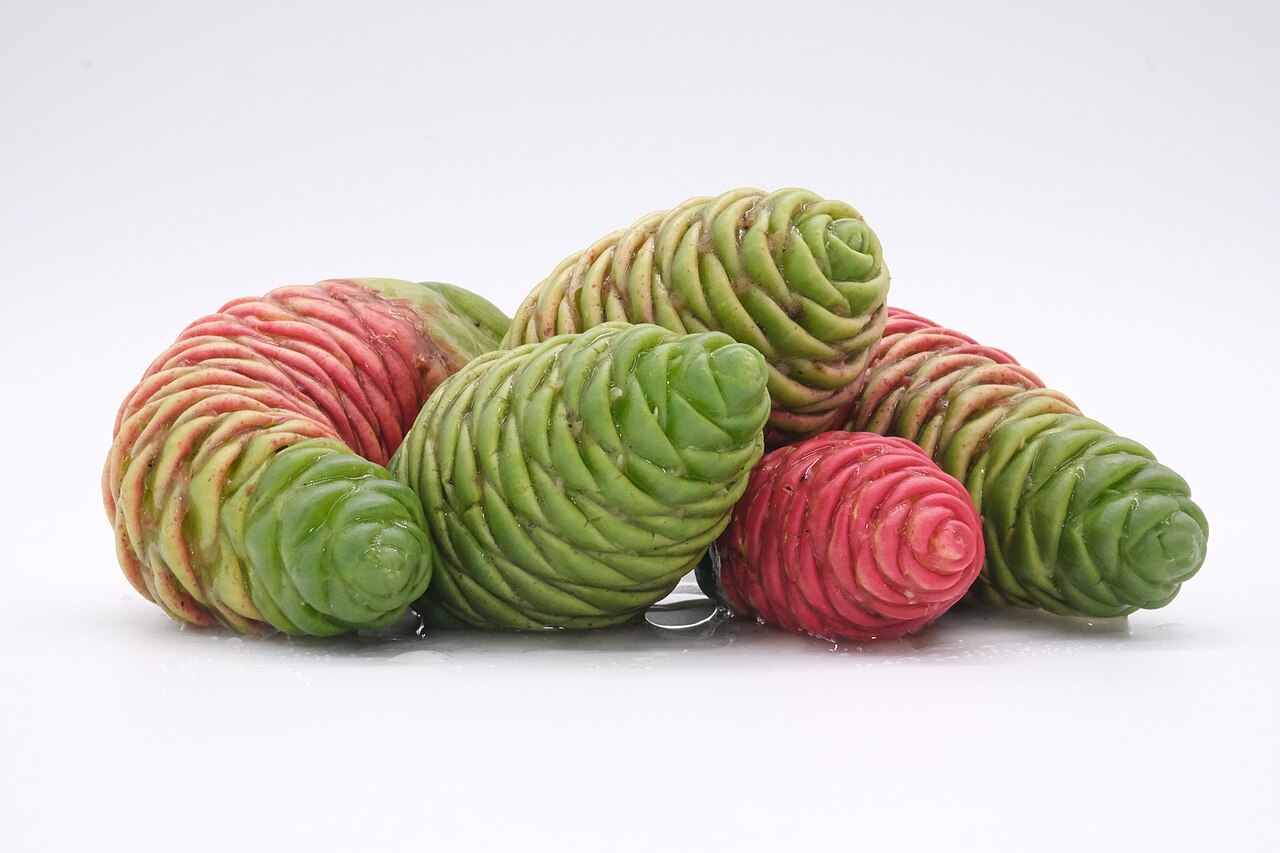
Shampoo ginger grows 1–1.5 m tall, with long leaves in two rows, like ginger leaves. Its most distinctive feature is the flower head. It rises straight from the base and is shaped like a pine cone.
The cone is green when young and turns red as it matures. Inside, it holds a slippery, fragrant liquid.
The plant grows wild all over Vietnam, along forest edges, field borders and under trees. It is also easy to grow in gardens. Research samples have been collected in Hue, Thanh Hoa (Ben En), Nghe An and the former Ba Ria – Vung Tau area. There are no concentrated plantations for oil production yet.
Shampoo ginger in everyday life
In many regions of Vietnam, the rhizome is crushed with rice wine and applied to swelling and bruises from knocks. It is also soaked in rice wine as a rubbing liniment for tired muscles. Some people boil it as a drink for stomach aches or indigestion.
In Hawaii and many Pacific islands, people squeeze the slippery liquid from the flower cones to wash their hair and smooth their skin. That is where the name “shampoo ginger” comes from. Some herbal shampoos today still use shampoo ginger extract.
Uses
Traditional use
In traditional Vietnamese medicine, shampoo ginger is described as pungent, bitter and warm in nature. Traditional medicine and folk practice use it to:
- relieve stomach aches, indigestion, colds and fever;
- make crushed poultices or rice-wine rubs for swelling and bruises from knocks;
- massage tired tendons and muscles.
What research says
- Anti-inflammatory and pain-relieving activity: in many laboratory studies, zerumbone shows anti-inflammatory, antioxidant and pain-relieving activity.
- Cancer (preclinical): zerumbone is being tested in the laboratory for its ability to inhibit cancer cells. These are only preclinical results. Zerumbone is not a cancer treatment.
For information only; not a substitute for medical advice.
Zerumbone: why is there so much interest?
Zerumbone is a crystalline sesquiterpene. Shampoo ginger is its richest known natural source. Over the past two decades, it has appeared in hundreds of publications on anti-inflammatory, antioxidant and antibacterial activity.
As a result, laboratories and cosmetic and herbal companies look for raw materials rich in zerumbone.
The difficulty is that zerumbone content varies greatly. A rhizome sample from Hue (published in 1993) reached about 72%, while a sample from Ben En had about 40%. A root sample from Nghe An had only about 1%, and the above-ground parts about 21%.
So the growing area and the plant part distilled decide the value of shampoo ginger oil. The company distils only the rhizome and always analyses samples first.
Industrial applications
| Sector | Applications |
|---|---|
| Pharmaceutical, rubbing oils | Massage oils, rice-wine liniments for bruises |
| Cosmetics | Massage oils, herbal shampoos, soaps |
| Raw material | Zerumbone isolation for research and cosmetics |
For buyers who want zerumbone itself, a high-zerumbone oil is the key starting point. The higher the zerumbone level, the more useful the oil is as a source material.
Scent profile and blending
Shampoo ginger smells of bitter, warm ginger with a slightly woody edge. It is not sweet like ordinary ginger.
- Blend with ginger and cassia for warming massage oils.
- Blend with Java citronella and orange in a diffuser to soften the scent.
- Blend with homalomena and camphor for muscle massage oils.

How to use at home
- Massage tired muscles or bruises (unbroken skin only): dilute 2–3 drops in 10 ml of carrier oil.
- Room scent: 2–3 drops in a diffuser, blended with citronella and orange.
- If the oil turns cloudy or crystallises in the cold, stand the bottle in warm water.
DIY massage oil for bruises and tired muscles (adults)
Mix 30 ml of coconut oil with 4 drops of shampoo ginger, 3 drops of ginger, 2 drops of camphor and 1 drop of cornmint. Shake well and store in a dark bottle.
For the first 24–48 hours after a knock, use a cold compress. After that, gently massage around the bruise 2–3 times a day.
Do not apply to open wounds. This recipe contains camphor and cornmint, so do not use it on children or pregnant women. Large swelling, severe pain or a suspected fracture need a medical check.
Safe use
- Dilute before applying to skin, and do a patch test on the wrist first.
- Do not swallow. Do not apply to open wounds, and avoid the eyes. If swallowed, seek medical care.
- Not for use during pregnancy or breastfeeding, or on young children.
- Keep out of reach of children and pets. Do not diffuse for long periods in closed rooms with dogs or cats.
How to recognise good oil and store it
- Good oil is colourless to pale yellow, with a clear bitter-ginger scent. Oil rich in zerumbone crystallises easily in the cold.
- The COA must state the zerumbone content. This is the parameter that decides the oil’s value.
- Keep tightly closed and away from sunlight. Best used within about 2 years.
Shampoo ginger vs ordinary ginger
| Criterion | Shampoo ginger | Ordinary ginger |
|---|---|---|
| Scientific name | Zingiber zerumbet | Zingiber officinale |
| Rhizome | Large, pale yellow inside, bitter | Smaller, yellow inside, pungent |
| Used in cooking | No | Yes |
| Main oil component | Zerumbone | Zingiberene |
Buyers sometimes confuse the two oils because of the shared word “ginger”. They have different uses and should never be swapped in a formula.
Quality parameters
The main quality parameter is zerumbone. Fresh rhizomes from Ben En yielded about 0.7% essential oil. The company analyses rhizome samples from each area before buying. Every batch comes with a COA and an MSDS.
Reference figures only; actual specifications follow the COA of each batch.
Why source shampoo ginger oil from Vietnam?
Shampoo ginger grows wild across the whole country, so raw material is widely available. Published Vietnamese samples include some with high zerumbone content, notably from Hue and Thanh Hoa.
The plant also grows well under orchards and forest plantations. This makes it possible to build cultivated supply from tested planting stock, rather than relying only on wild plants.
Our approach is simple: test first, then buy. Each growing area is checked for zerumbone before we sign a purchase agreement. This helps keep the batch profile more predictable for buyers.
What buyers usually ask for
Buyers of shampoo ginger oil usually ask for:
- COA (certificate of analysis) stating the zerumbone content of the batch.
- GC-MS chromatogram, to confirm zerumbone and the minor components such as camphene and humulene.
- MSDS (safety data sheet) for handling, storage and transport.
- A sample before contract, to check the profile and how the oil behaves in the buyer’s process.
Because the oil may crystallise, buyers should also plan how they will warm and handle it. Gentle warming in a water bath brings it back to liquid.
Growers & cooperatives
Shampoo ginger grows wild everywhere and is easy to plant under orchard trees or along forest edges. Samples with high zerumbone have been recorded in Hue and Thanh Hoa.
- The company buys fresh or dried rhizomes, harvested when mature (usually in autumn). Rhizomes must be free of soil and not rotten.
- Send a sample of 1–2 kg of rhizome for zerumbone analysis. After that, we sign a seasonal purchase agreement.
- We provide free planting stock and technical support for growing under orchards and forest plantations. Planting stock comes from sources tested for high zerumbone.
- When harvesting wild plants, leave part of the rhizome so the plant can grow back.
- Intercropping shampoo ginger makes use of land under orchard trees and needs little care. Rhizomes keep well in the ground, so growers can choose when to harvest.
To send a sample or request planting stock, call or message us on Zalo at +84 983 299 529. See more on the Raw material sourcing page.
Extraction process
- Analyse the sample, then wash and slice the rhizomes.
- Steam-distil and separate the oil layer.
- Filter while warm so zerumbone does not crystallise in the pipes.
- Test for zerumbone and keep the COA under its batch code.
Frequently asked questions
How is shampoo ginger different from ordinary ginger?
Shampoo ginger has a large rhizome, pale yellow inside and bitter, and is not used in cooking. Its oil is rich in zerumbone and quite different from ginger oil.
What is zerumbone?
A crystalline sesquiterpene that is characteristic of shampoo ginger. It is widely studied for its anti-inflammatory activity.
Can shampoo ginger oil be used on bruises?
In Vietnamese folk practice, shampoo ginger is often rubbed on swelling and bruises. Use diluted oil and never apply it to broken skin. Large swelling or severe pain need a medical check.
Can shampoo ginger oil cure cancer?
No. Results on zerumbone are only at the laboratory stage. It is not a cancer treatment.
Why does zerumbone content vary between batches?
It depends on the growing area, the age of the rhizome and the harvest season. That is why the company records it on the COA of each batch.
Why does the oil turn solid in the cold?
Zerumbone is a solid at low temperatures, so zerumbone-rich oil may crystallise. Warm the bottle gently in warm water to make it liquid again.
Is shampoo ginger the same as "ngải mặt trời"?
Some places call shampoo ginger “ngải mặt trời”, but the same name is used for other plants too. When selling raw material, send photos of the plant, rhizome and flower cone so the company can confirm the species.
Where should I plant shampoo ginger?
Under orchard trees or along forest edges with light shade, in loose, crumbly soil. Contact us to receive tested planting stock.
Read more: Ginger oil Homalomena oil Camphor oil Vietnamese herbal essential oils
Supplying shampoo ginger raw material, or interested in contract growing?
Thảo Dược Xanh buys raw materials and provides technical support to farmers and cooperatives in Vietnam.
References: Shampoo ginger – Do Tat Loi · Shampoo ginger essential oil (VNU Journal of Science)