Litsea cubeba oil is steam-distilled from the fresh fruit of Litsea cubeba, a tree common in the high mountains of northern Vietnam. The oil contains 70–90% citral, which gives it a fresh, bright lemon-lemongrass scent.
In traditional Vietnamese medicine, the fruit is a warming remedy used for indigestion. The oil is used to remove odours and repel mosquitoes, and in perfumes and soaps.
Quick facts
- Scientific name
- Litsea cubeba (Lour.) Pers.
- Trade name
- Litsea cubeba oil, May Chang oil
- Part used
- Fresh fruit
- Method
- Steam distillation
- Appearance & odour
- Pale yellow; fresh lemon-lemongrass scent, slightly sweet
- Main components
- Citral (geranial + neral) 70–90%; limonene, methyl heptenone
- Storage
- Dark glass bottle, tightly closed, in a cool place
What is Litsea cubeba oil?
May Chang (màng tang, Litsea cubeba) is a shrub or small tree of the laurel family. Its fruit is as small as a peppercorn. While still green, it has a very strong lemon scent.
Steam-distilling the fresh fruit gives a pale yellow oil. It smells of sweet lemon and lemongrass, brighter than lemongrass oil itself.
On the international market, the oil is sold as “Litsea cubeba oil” or “May Chang oil”. It is one of the largest natural sources of citral.
Citral provides a lemon scent. It is also a starting material for ionone (a violet-like scent) and many other aroma chemicals.
What does the tree look like, and where does it grow?
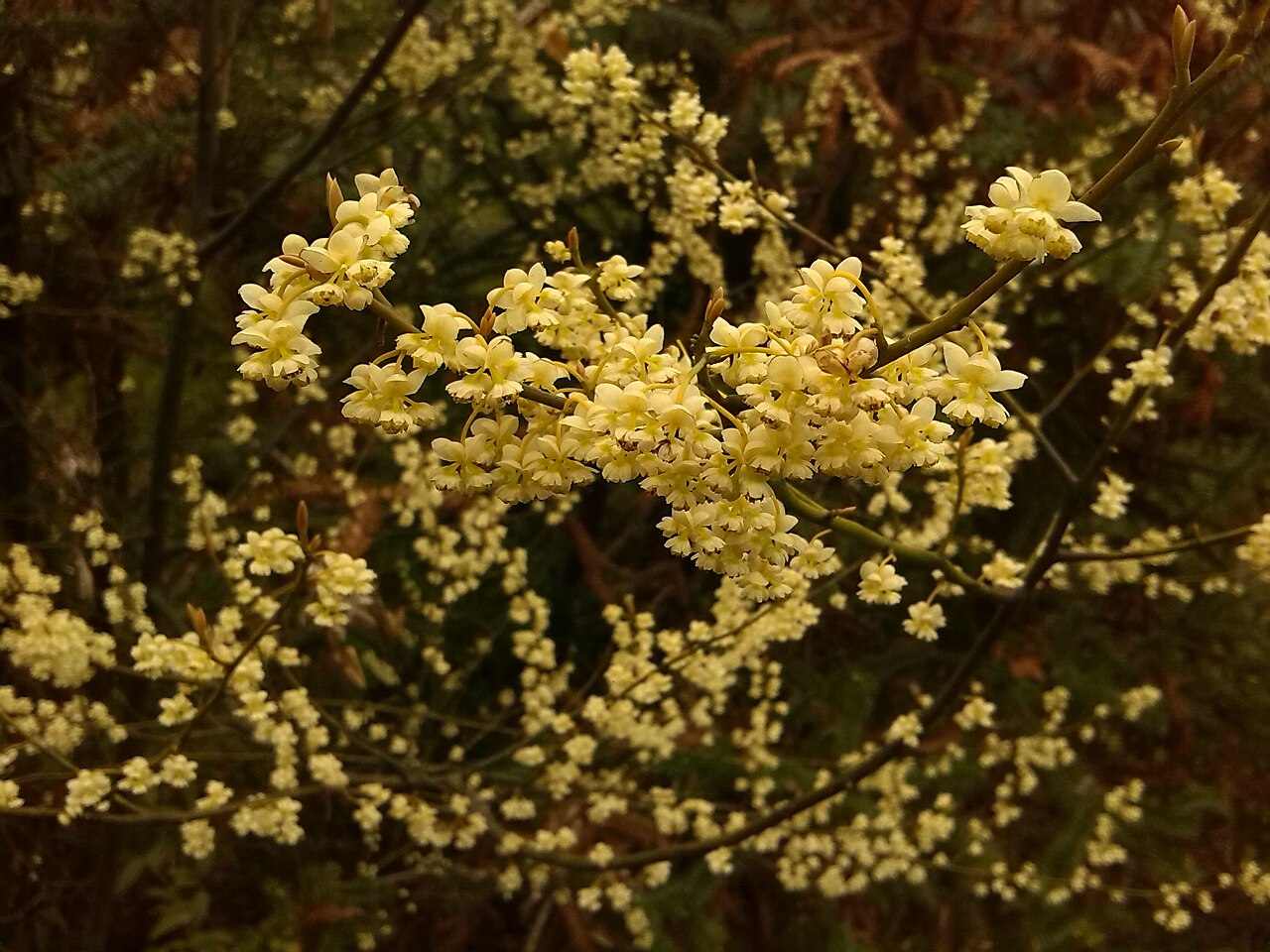
May Chang usually grows to about 5 m, with long, narrow leaves that smell of lemon and lemongrass when crushed. According to Do Tat Loi’s reference work on Vietnamese medicinal plants, the tree bears small whitish-yellow flowers in months 1–3, and fruits in months 4–6.
The tree prefers a cool climate. It is common in regenerating forest and on the edges of old upland fields.
In Vietnam, May Chang grows wild in cool mountain areas: Lao Cai (including former Yen Bai province), Lai Chau, Tuyen Quang (including former Ha Giang province) and Cao Bang. According to Lao Cai Newspaper (2023), the former Lao Cai province alone had more than 300 ha of May Chang, mostly scattered through regenerating forest.
Output across the province is over 100 tonnes of fruit a year.
May Chang in upland life
For the Hmong and Dao peoples of the uplands, May Chang is a familiar plant. The fruit seasons grilled dishes and meat; the roots and branches are soaked in rice spirit as a rubbing liniment.
In recent years, many communes in Lao Cai have collected the fruit and sold it to oil stills. Trees that grow on their own have thus become a seasonal source of income.
Because the fruit is seasonal and weather-dependent, Litsea cubeba oil output varies from year to year.
Uses
Traditional use
In traditional Vietnamese medicine, May Chang fruit (tất trừng già) is described as pungent and warming. It is used:
- for stomach ache caused by cold, indigestion and bloating;
- for headache (using the fruit and roots);
- in folk practice, roots and branches soaked in rice spirit are rubbed on aching bones and joints.
What research says
- Antibacterial and antifungal: in laboratory tests, citral inhibits many bacteria and fungi. This is the basis for using Litsea cubeba oil to remove odours and for cleaning.
- Mosquitoes and cockroaches: in many tests, Litsea cubeba oil repelled and killed mosquitoes and cockroaches.
The fresh lemon scent is also popular for room diffusing. Whether it feels pleasant depends on the person.
For information only; not a substitute for medical advice.
Industrial applications
| Industry | Applications |
|---|---|
| Perfume, cosmetics | Lemon top note; soap, shower gel |
| Household | Scented candles, room diffusing, floor cleaners, insect-repellent products |
| Flavours | Lemon flavour for drinks and confectionery |
| Raw material | Isolation of citral for ionone and other aroma chemicals |
Scent profile and blending
May Chang smells of sweet, bright lemon and feels very “fresh”. In perfumery it is a top note. It evaporates quickly but makes a clear first impression.
- Blend with Java citronella for a pleasant repellent blend.
- Blend with mint for a cool, clean scent for bathrooms and cars.
- Blend with white champaca leaf and patchouli in oil-based perfumes to make the scent last longer.

How to use at home
- Room scent and odour removal: 3–4 drops in a diffuser.
- Deter mosquitoes and cockroaches: mop floors and under the kitchen counter with 10 drops in a bucket of water. Put a few drops on cotton balls in cupboard corners.
- Fridge and bin odours: 2–3 drops on cotton or paper; replace every few days.
- Handmade candles and soap: adds a fresh lemon note, usually at 1–3% of the formula.
Safe use
- Citral can easily irritate the skin or cause allergy. If used on skin, dilute below 1% (no more than 1–2 drops in 10 ml carrier oil) and patch-test on the wrist first.
- Do not apply to young children. Pregnant and breastfeeding women should not use it.
- Do not swallow; avoid the eyes. If swallowed, do not induce vomiting; call 115 (Vietnam emergency) or go to a medical facility.
- Keep away from children and pets. Do not diffuse in a closed room with a cat.
How to recognise good oil and store it
- Good oil is pale yellow and clear, with a distinct, sweet lemon-lemongrass scent.
- Oil stored too long or exposed to air loses its lemon note and turns harsh, because citral oxidises.
- Keep tightly closed, in a cool place, away from sunlight. Best used within 1–2 years.
May Chang vs lemongrass: what is the difference?
| Criterion | May Chang | Lemongrass |
|---|---|---|
| Raw material | Fruit | Leaves |
| Citral | 70–90% | 65–85% |
| Scent | Sweet, bright lemon | Lemon-grassy, slightly sharp |
| Season | Fruit season (months 4–6) | All year |
What is citral, and why does it set the value of the oil?
Citral is the common name for two compounds, geranial and neral, which together create the typical lemon scent. The flavour and fragrance industry uses citral directly for lemon notes. Citral is also a raw material for ionone (violet scent), vitamin A and many other aroma chemicals.
For this reason, Litsea cubeba oil is priced mainly by its citral content. Green, firm fruit distilled right after picking usually gives more citral than fruit that is stored, bruised or mixed with leaves. This is why the company asks for fresh fruit delivered quickly.
Two DIY products with Litsea cubeba oil
- Bathroom and car deodorising spray: 100 ml distilled water, 10 ml 70% alcohol, 10 drops May Chang, 5 drops mint. Shake well before spraying.
- Kitchen cleaner: 1 litre warm water, 1 spoon vinegar, 10 drops May Chang, 5 drops cassia leaf. Wipe stovetops and sinks. Avoid natural stone, because of the vinegar.
Quality specifications
The main parameter is citral content; the reference standard is ISO 3214. Supply follows the fruit season, so companies needing large volumes usually order before the season. Every lot comes with a COA and MSDS.
Reference figures; actual values follow the COA of each lot.
Why source Litsea cubeba oil from Vietnam?
May Chang grows naturally in the cool mountains of northern Vietnam. Much of the fruit comes from trees in regenerating forest and old upland fields, not from intensive plantations.
Fruit is picked green and distilled close to where it grows. Short transport from tree to still matters for this oil, because fresh fruit gives the best citral content.
Fruit collection also brings seasonal income to upland communities. Our sustainability commitment, described below, means trees are not cut down to harvest the fruit.
How origins compare
China is the best-known and largest source of Litsea cubeba oil on the world market. The tree also grows wild in other parts of Southeast and South Asia, including Vietnam.
Because the plant is the same species, the oil from different origins shares the same citral-rich character. The differences that matter come from fruit freshness, harvest timing and distillation practice.
Buyers therefore judge a lot mainly by its citral level and its scent, not only by country of origin. ISO 3214 gives a common reference for that comparison.
What buyers usually ask for
Fragrance houses, flavour companies and distributors typically ask for:
- COA (certificate of analysis) for the lot, with citral content.
- GC-MS or GC chromatogram showing geranial, neral and the minor components.
- MSDS / SDS for handling and transport.
- A sample before contract, to check scent and performance in their own formula.
- Season planning, since supply is tied to the fruit harvest in months 4–6.
If you need Litsea cubeba oil for a product line, contact us before the season to discuss volumes and documents.
Growers & cooperatives
The company buys fresh May Chang fruit picked in months 4–6 and delivered the same day or the next day. Priority areas:
- Lao Cai: Bat Xat, Sa Pa, Bac Ha, Bao Thang, Van Ban; the former Yen Bai province area.
- Lai Chau, Tuyen Quang (including former Ha Giang province), Cao Bang.
Requirements and commitment:
- Fruit must be green, firm, not bruised and free of leaves and twigs.
- Sustainability commitment: we only buy fruit harvested by cutting the clusters. We do not buy fruit from trees that were cut down.
- Household groups or cooperatives that can gather several tonnes per season can sign contracts in advance.
According to Lao Cai Newspaper, stills in Lao Cai obtain about 22–27 kg of oil from each tonne of fruit. Do Tat Loi records that May Chang fruit contains about 2–6% essential oil, depending on location. See more on the Raw material sourcing page.
Extraction process
- Pick the fruit while green and firm; transport it to the still the same day.
- Steam-distil and separate the oil layer.
- Settle, filter and remove water.
- Test for citral and keep the COA under the lot code.
Frequently asked questions
How is May Chang oil different from lemongrass oil?
Both are rich in citral. May Chang smells of sweeter, brighter lemon, while lemongrass smells more grassy.
Does Litsea cubeba oil repel mosquitoes?
Studies show it repels mosquitoes in tests. Blending it with Java citronella gives a more pleasant scent and a more effective blend.
Why does May Chang output change from year to year?
The fruit is mostly collected from trees growing naturally, so it depends on the weather in the flowering season, months 1–3.
Can dried May Chang fruit be distilled?
Yes, but it gives less oil and a weaker scent. Fresh fruit gives the best oil.
I have May Chang trees on my forest garden. How can I sell the fruit?
Call or message us on Zalo before the fruit season, with an estimated quantity, so the company can arrange collection.
Is Litsea cubeba oil used in food?
Yes, as a flavouring, with lots that meet the standard and at controlled levels. Do not add it to food or drinks yourself at home.
Can May Chang be planted?
Yes, from seed or seedlings in cool areas; the trees bear fruit after a few years. The company is open to talking with households and cooperatives that want to try growing it.
Why is Litsea cubeba oil priced by citral content?
Citral is what buyers use it for, both as a lemon note and as a raw material. Higher citral usually means higher value.
When should industrial buyers plan their orders?
Before the fruit season. Supply follows the harvest in months 4–6, so large-volume buyers usually order in advance.
Read more: Java citronella oil White champaca leaf oil Cornmint oil Vietnamese herbal essential oils
Supplying litsea cubeba raw material, or interested in contract growing?
Thảo Dược Xanh buys raw materials and provides technical support to farmers and cooperatives in Vietnam.
References: Litsea cubeba – Do Tat Loi, Medicinal Plants of Vietnam · Potential of Litsea cubeba oil (Lao Cai Newspaper)