Vietnam grows many plants that yield valuable essential oils: cornmint, cassia, star anise, Java citronella, litsea, black cardamom, patchouli and more. This page introduces the 15 oils for which Thảo Dược Xanh (Blue Herbs) buys raw materials and runs extraction.
For each oil you will find its main compounds, uses, safe-use notes, growing areas and how growers can sell raw material to the company. Buyers will also find what to check on a COA and what to ask for before a contract.
What are herbal essential oils?
An essential oil is the fragrant, volatile part stored in a plant’s leaves, flowers, fruit, bark or roots.
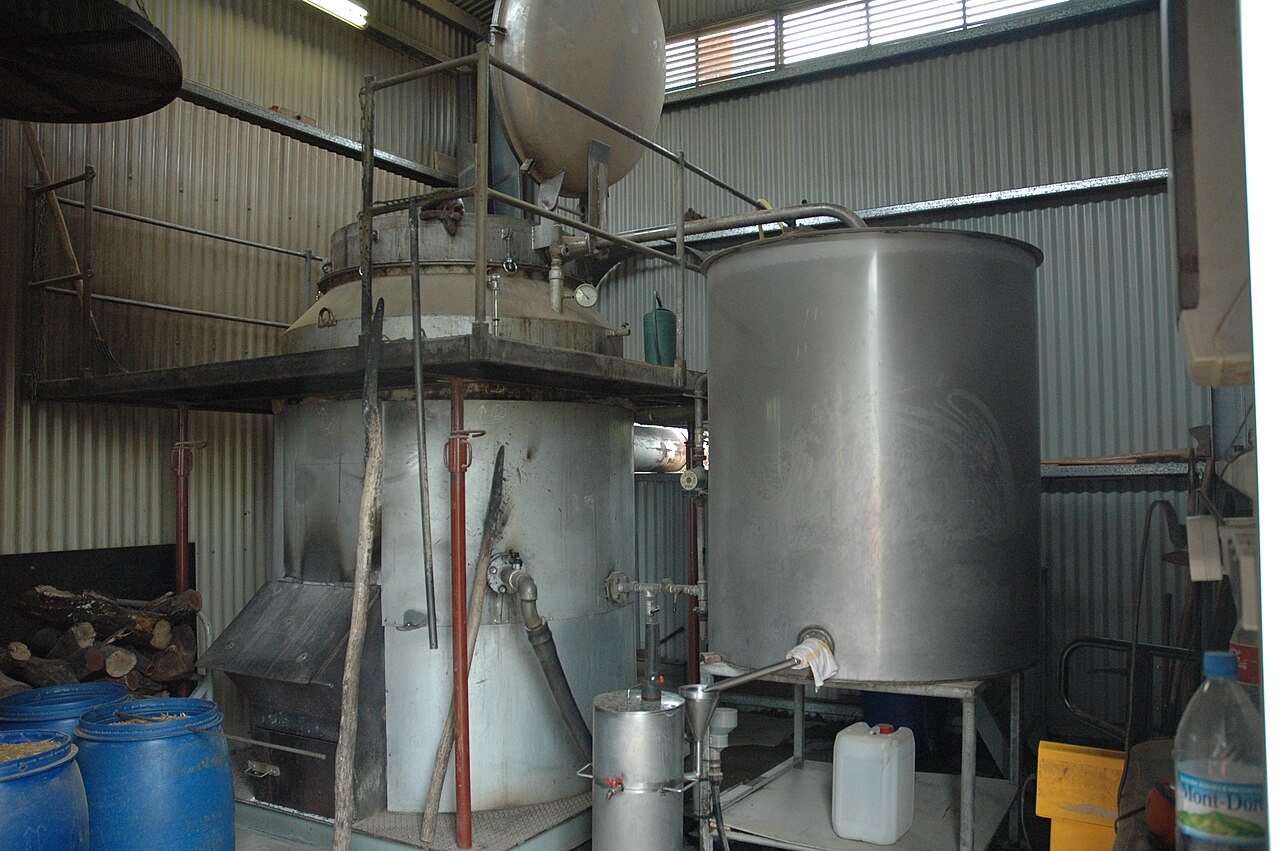
The most common way to obtain it is steam distillation. Steam passes through the plant material and carries the oil with it. The vapour is then condensed, and the oil layer is separated from the water.
Each oil has its own chemical make-up, which decides its scent and its uses. Examples are menthol in cornmint, cinnamaldehyde in cassia and citral in litsea.
Essential oils are very concentrated. Depending on the plant, it takes tens to hundreds of kilograms of raw material to make 1 kg of oil. That is why oils are used in small amounts and must be diluted. It is also why quality depends so much on the raw material, the distillation and the testing.
Extraction methods
| Method | Used for | Notes |
|---|---|---|
| Steam distillation | Most leaves, fruits, barks and roots | The most common method; used for all 15 oils on this page |
| Cold pressing | Orange, lemon and pomelo peel | No heat involved |
| Solvent extraction | Flowers (champaca, jasmine), ginger oleoresin | Gives an “absolute” or oleoresin, not a distilled essential oil |
The difference matters when you compare offers. An absolute or an oleoresin is a different product from a distilled oil, with a different scent profile, price logic and regulatory status.
Why source essential oils from Vietnam?
- Varied climate: from cool high mountains (black cardamom, litsea) to hot, humid midlands (Java citronella, clove basil, patchouli).
- Large existing growing areas: about 180,000 ha of cassia; tens of thousands of hectares of star anise in Lang Son and Cao Bang; many black cardamom plots under forest canopy in Lao Cai, Lai Chau and Tuyen Quang.
- Local know-how: many of these plants have long been used as remedies and spices, so farmers already know how to grow and harvest them.
- Plenty of by-products: pruned cassia twigs and leaves, broken star anise fruit and pruned champaca leaves can all be distilled. This adds value for growers.
Even so, most Vietnamese essential oil is still sold as crude oil, without a brand or clear quality standards. Thảo Dược Xanh aims for a closed chain: linking growing areas, extraction, batch-by-batch testing and traceability.
For international buyers, this chain is the main point. A known growing area, a batch code and a test report make it easier to qualify a new supplier and to repeat an order with the same profile.
15 key essential oils
| Essential oil | Part used | Main compound | Known for | Main raw-material areas |
|---|---|---|---|---|
| Cornmint (bạc hà á) | Leaves, stems | Menthol | Cooling; used for stuffy nose and headache | Phu Tho, Tuyen Quang |
| Cassia bark (quế vỏ) | Bark | Cinnamaldehyde | Warming; deodorising; repels mosquitoes | Lao Cai, Thai Nguyen, Da Nang |
| Cassia leaf & twig (quế cành, lá) | Twigs, leaves | Cinnamaldehyde | Floor cleaning; repels ants and mosquitoes | Lao Cai, Thanh Hoa, Nghe An |
| Java citronella (sả Java) | Leaves | Citronellal, geraniol | Repels mosquitoes and cockroaches | Lao Cai, Son La, Lam Dong |
| Litsea (màng tang) | Fruit | Citral | Lemon scent; deodorising; repels mosquitoes | Lao Cai, Lai Chau, Cao Bang |
| Star anise (hồi) | Fruit | Anethole | Warming; flavouring | Lang Son, Cao Bang |
| Clove basil (hương nhu trắng) | Whole plant | Eugenol | Used for colds; dental use | Thanh Hoa, Nghe An, Phu Tho |
| Ginger (gừng) | Rhizome | Zingiberene | Warming massage; used against nausea | Nghe An, Lao Cai, Quang Tri |
| Patchouli (hoắc hương) | Cured leaves | Patchoulol | Perfume base note; repels storage pests | New plantings (partner growers) |
| Tsao-ko (thảo quả) | Fruit | 1,8-Cineole | Spice scent; digestion | Lao Cai, Lai Chau, Tuyen Quang |
| Camphor (long não) | Leaves, twigs | Camphor | Massage; repels cockroaches and storage pests | Northern mountains |
| White champaca leaf (ngọc lan lá) | Leaves | Linalool | Relaxing; perfumery | Pruned leaves, nationwide |
| Homalomena (thiên niên kiện) | Rhizome | Linalool | Massage for bones and joints | Thanh Hoa, Nghe An, Hue |
| Shampoo ginger (gừng gió) | Rhizome | Zerumbone | Bruise rub; anti-inflammatory research | Hue, Thanh Hoa |
| Thai basil (húng quế) | Whole plant | Methyl chavicol | Repels mosquitoes; flavouring | Thai Nguyen, Thanh Hoa, Dak Lak |
Click each name to see the oil’s composition, uses, how to use it and where the company buys raw material.
Choose an oil by need
| Need | Suggested oils | Notes |
|---|---|---|
| Repel mosquitoes | Java citronella, litsea, Thai basil, cassia | Blend Java citronella + litsea for a pleasant scent |
| Repel cockroaches, ants, storage pests | Camphor, Java citronella, cassia leaf & twig, patchouli | Also keep the house dry and clean |
| Steam inhalation for colds, blocked nose | Cornmint, clove basil, Java citronella | Do not use steam inhalation for young children |
| Massage for aches | Ginger, homalomena, shampoo ginger, camphor | Always dilute |
| Relaxing, winding down | White champaca leaf, patchouli | Diffuse lightly and in short sessions |
| Kitchen and bathroom odours | Litsea, cassia leaf & twig, mint | Wipe or spray |
| Warm scent for cold days | Cassia bark, star anise, tsao-ko, ginger | Blend with orange |
Typical industry applications
For B2B buyers, the same 15 oils fall into a few familiar groups. The table below is a simple guide, not a specification.
| Industry | Oils often considered | Typical role |
|---|---|---|
| Flavours | Cornmint, cassia bark, star anise, ginger, tsao-ko | Mint, cinnamon, anise and spice notes |
| Fragrance and perfumery | Patchouli, white champaca leaf, litsea, cassia bark | Base, floral, citrus and warm notes |
| Cosmetics and personal care | Cornmint, litsea, Java citronella | Cooling or fresh scent in shampoos, soaps, creams |
| Household and cleaning | Cassia leaf & twig, litsea, Java citronella, camphor | Fresh or “clean and warm” scent in cleaners |
| Insect-repellent products | Java citronella, litsea, Thai basil, cassia | Natural repellent ingredients |
| Balms and massage oils | Cornmint, camphor, ginger, homalomena | Cooling or warming rubs |
Each use has its own rules. Food flavours, cosmetics and repellents fall under different regulations in each market, so the intended use should be agreed before a batch is chosen.

Safe use
Natural does not mean completely safe. A few general rules:
- Do not apply undiluted oil to skin. Always mix with a carrier oil (coconut, almond, jojoba).
- Patch test first: put a little diluted oil on the inside of your wrist and wait 24 hours.
- Do not swallow essential oils, and do not add them to food or drinks at home.
- Young children, pregnant or breastfeeding women, and people with asthma or a history of seizures should ask a doctor first. Do not use camphor or mint oil on young children, especially near the nose and face.
- Keep out of reach of children and pets. Cats are very sensitive to essential oils; do not diffuse in a closed room with cats or pet birds.
- Diffuse lightly and in breaks, 15–30 minutes at a time, with a window slightly open.
- Never put essential oils in the eyes, ears or nose. If oil gets in the eyes, rinse with plenty of clean water.
If swallowed or if skin is irritated
- Swallowed: do not try to induce vomiting. Rinse the mouth and call emergency services (115 in Vietnam) or go to the nearest medical facility. Take the bottle with you. For young children, even a small spoonful of essential oil can be dangerous.
- Red, burning skin: wipe with a carrier oil or cooking oil, then wash with soap. If it does not settle, see a doctor.
- Breathing trouble or dizziness while diffusing: switch the diffuser off and go somewhere airy. If it does not settle, see a doctor.
| Purpose | Suggested dilution | Example |
|---|---|---|
| Face, sensitive skin | 0.5–1% | 1–2 drops in 10 ml carrier oil |
| Body massage | 1–2% | 2–4 drops in 10 ml carrier oil |
| Small areas (back of neck, temples) | 2–3% | 4–6 drops in 10 ml carrier oil |
The table assumes 1 ml is about 20 drops. Oils that irritate skin easily should be used at lower rates or not applied to skin at all: cassia (cinnamaldehyde), clove basil (eugenol) and litsea (citral).
Reading an essential-oil COA
A COA (certificate of analysis) shows the composition and test results of one specific batch. When buying, check:
- Scientific name and plant part: to be sure it is the right oil (for example cassia bark or cassia leaf & twig).
- Main compounds (%): menthol, cinnamaldehyde, citral and so on, measured by gas chromatography (GC).
- Physical properties: relative density, refractive index and optical rotation, compared with an ISO or TCVN (Vietnamese national) standard where one exists.
- Batch code and production date: for traceability.
Thảo Dược Xanh prepares a COA and an MSDS for each batch of essential oil.
What international buyers usually ask for
Buyers who are new to Vietnamese oils tend to ask the same questions. It helps to prepare them before the first call.
- COA per batch: main compounds and physical properties, tied to a batch code.
- GC or GC-MS chromatogram: many buyers want to see the full profile, not only the main compound, to check for blending or adulteration.
- MSDS (SDS): needed for transport, storage and workplace safety.
- A sample before contract: most buyers test a sample in their own lab or formulation before they commit. Contact the company to discuss sample needs.
- Intended use: food flavour, cosmetic, household or pharmaceutical. Each use has different rules, so it should be stated from the start.
- Fragrance rules: for cosmetics and fragrances, buyers check the oil against IFRA standards and the allergen labelling rules of their market.
- Traceability: growing area, harvest season and plant part. Thảo Dược Xanh keeps a COA on file for each batch for this reason.
Clear answers to these points usually matter more than a low first price. A buyer needs to know that the second and third orders will match the first.
What Thảo Dược Xanh does with essential oils
Thảo Dược Xanh is a company that researches, grows and processes medicinal plants. For essential oils, the company:
- Buys raw materials from smallholders, cooperatives and forest owners in growing areas across the country.
- Supports growers with free planting material and technical help for cornmint, Java citronella, clove basil, patchouli, Thai basil and shampoo ginger.
- Extracts and tests each batch, keeping a COA on file for traceability.
- Commits to sustainable harvesting: it does not buy material from forest clearing, from plants dug out by the roots, or from special-use (protected) forests.
The company’s main growing area today is its SW88 cornmint farm in Lac Luong commune, Phu Tho (formerly Hoa Binh province). The company also has a trial plot in Tuyen Quang (formerly Ha Giang province).
Sell raw materials to the company
Are you a grower, cooperative or forest owner with raw material for one of the 15 oils above? See the Raw material sourcing page. It lists priority areas, harvest seasons, raw-material requirements and how to get in touch.
You can also call or message on Zalo: +84 983 299 529.
Frequently asked questions
What is the difference between a pure essential oil and a blended one?
A pure essential oil contains only oil distilled from the plant. A blended oil also contains carrier oil, alcohol or synthetic fragrance. A COA and a chromatogram are the most reliable way to tell them apart.
How long do essential oils keep?
Most keep well for 1–3 years if tightly closed, stored somewhere cool and kept out of sunlight. Citrus oils and oils rich in citral or linalool oxidise faster; patchouli, on the other hand, gets rounder with age.
Why do oils of the same type smell different?
Because of the plant variety, growing area, harvest season, plant part and distillation method. That is why each batch needs testing.
Can essential oils replace medicine?
No. The information on uses on this page is for reference only; if you are ill, see a doctor.
Which oil is a good place to start?
White champaca leaf, Java citronella and cornmint smell pleasant to most people. Start with diffusing or adding to floor-cleaning water before trying them on skin. In homes with young children, avoid mint oil.
Can I use essential oils on pets?
Not on your own. Cats, dogs and birds are more sensitive to many oils than people are. Do not apply oils to their fur or let them lick it.
Do essential oils really repel mosquitoes?
In tests, Java citronella, litsea and Thai basil repel mosquitoes. However, protection lasts less time than synthetic repellents, so they must be reapplied often. In areas with dengue fever, you still need bed nets and to remove mosquito breeding sites.
Does the company sell finished products on this site?
These pages introduce each oil and the raw-material chain behind it. For business enquiries about an oil, call or message on Zalo: +84 983 299 529.
Why does the intended use matter when buying oil?
A food flavour, a cosmetic and a household cleaner are each regulated differently. Stating the use early helps choose the right batch and the right documents.
Read more: Cornmint oil Java citronella oil Cassia bark oil Raw material sourcing
Do you grow or supply essential-oil crops in Vietnam?
Thảo Dược Xanh buys raw materials for 15 essential oils and supports growers with seedlings and technical advice.
For information only; not a substitute for medical advice.